

Bridges of the Province of Palencia
The province of Palencia boasts several historical and modern bridges, some of the most well-known being:
Bridges in the city of Palencia:
Puente Mayor: This is one of the most emblematic bridges in the city. It has Roman origins and has been rebuilt and modified over the centuries. It is located right in the city center.
Puentecillas: This is the oldest bridge in the city, also of Roman origin. It is located on the left bank of the Carrión River, near the Sotillo de los Canónigos park.
Puente de Hierro: Built at the beginning of the 20th century, this bridge is an example of the industrial architecture of the time. It crosses the Carrión River and is located near the Palencia hospital.
Pasarela del Sotillo: This modern pedestrian walkway crosses the Carrión River and connects the city center with the Sotillo de los Canónigos park.
Bridges in the province of Palencia:
Puente Romano de Rojadillo: Located in the Montaña Palentina, this Roman-origin bridge was part of an ancient road that connected the Meseta with Cantabria.
Puente Perdiz: Situated in the town of Nestar, this bridge is also of Roman origin and is set in a privileged natural environment.
Puente de Fitero: This medieval bridge is located in the town of Itero de la Vega and crosses the Pisuerga River.
These are just some of the most notable bridges in the province of Palencia. Many of them hold great historical and architectural value and are part of the cultural heritage of the region.

Roman Bridge of Rojadillo
Puente Romano de Rojadillo Close to the northern town of Valberzoso. Hidden within a lush forest is a solidly constructed Roman bridge. It features a single arch with a diameter of nine meters over the Camesa River. Very near Barruelo de Santullán. More info.

Roman Bridge of Puentetoma
The Roman Bridge of Puentetoma is located in the town of Puentetoma, just ten kilometers from Aguilar de Campoo. This stone bridge over the Lucio River, of Roman origin, consists of a single arch, renovated in medieval times. Next to this bridge, there is another small bridge of Celtic origin.

Puente Mayor de Palencia
Puente Mayor of Palencia over the Carrión River. It is a 16th-century construction, made with regular ashlar stones, featuring seven arches and prismatic cutwaters between them. It was renovated in the 19th century to adapt it to modern times and to accommodate vehicular traffic in the city. This bridge connects the city with Monte el Viejo and the Allende del Río neighborhood, and serves as an exit route towards León.

Iron Bridge in Palencia
One of the emblems of the city of Palencia, built at the beginning of the 20th century. Conceived by Abilio Calderón, who was the Director General of Public Works. The bridge was made of iron from the Nervión shipyards and designed by engineers Luis Morales and Eduardo Jungairiño. A project that replaced an old wooden bridge, with a clear function to connect the two banks of the Carrión River. Stone from the Market Arch was used to set the bridge abutments, which served as support to hold the structure.

Puentecillas Bridge in Palencia
It is one of the most representative and emblematic constructions in the city of Palencia. Considered the oldest bridge, it has remnants of Roman origin. It is a bridge that underwent numerous transformations, the most notable in the 16th century, which is the appearance it presents today. A bridge that connected the city with the garden area. Today, it is a pedestrian bridge where we can access the Sotillo park, a landscaped area for walking and engaging in sports activities.
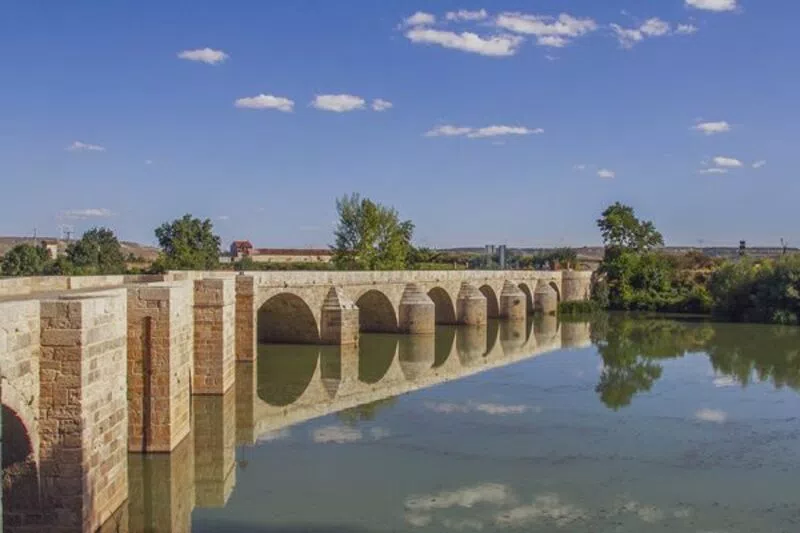
Torquemada Bridge
Torquemada Bridge, twenty-five arches that have witnessed history. The Torquemada Bridge over the Pisuerga River is considered one of the longest in Castilla y León, with a length of 352 meters. It dates back to 1583 and was constructed in ashlar by the stonemasons Diego Gómez Sisniega and his son. Originally consisting of twenty-two arches, it is believed to have replaced two wooden bridges. In the following centuries, it was restored and expanded to twenty-five arches. It has been the scene of historical events; Emperor Charles V visited the town on several occasions, and in 1808, Napoleonic troops crossed this bridge.

Bridge of the Partridge in Nestar
Bridge popularly known as the Perdiz Bridge, located in the northern town of Nestar over the Rubagón River, a tributary of the Pisuerga River. Of Roman origin, it is dated to the late 1st century BC. Built with large rusticated sandstone blocks, it features five arches. It was constructed by the same engineers who designed the road connecting Herrera de Pisuerga (Pisoraca) with Santander (Postus Blendium).