Car Routes in Palencia
The entire province offers beautiful routes.
Palencia is a province with stunning landscapes, medieval castles, charming villages, and delicious cuisine. Some driving routes to enjoy the best of the province are located in the north of Palencia, focusing on nature and Romanesque art. In the rest of the province, there are routes with religious, gastronomic, and cultural themes.

The Roblón of Monasterio
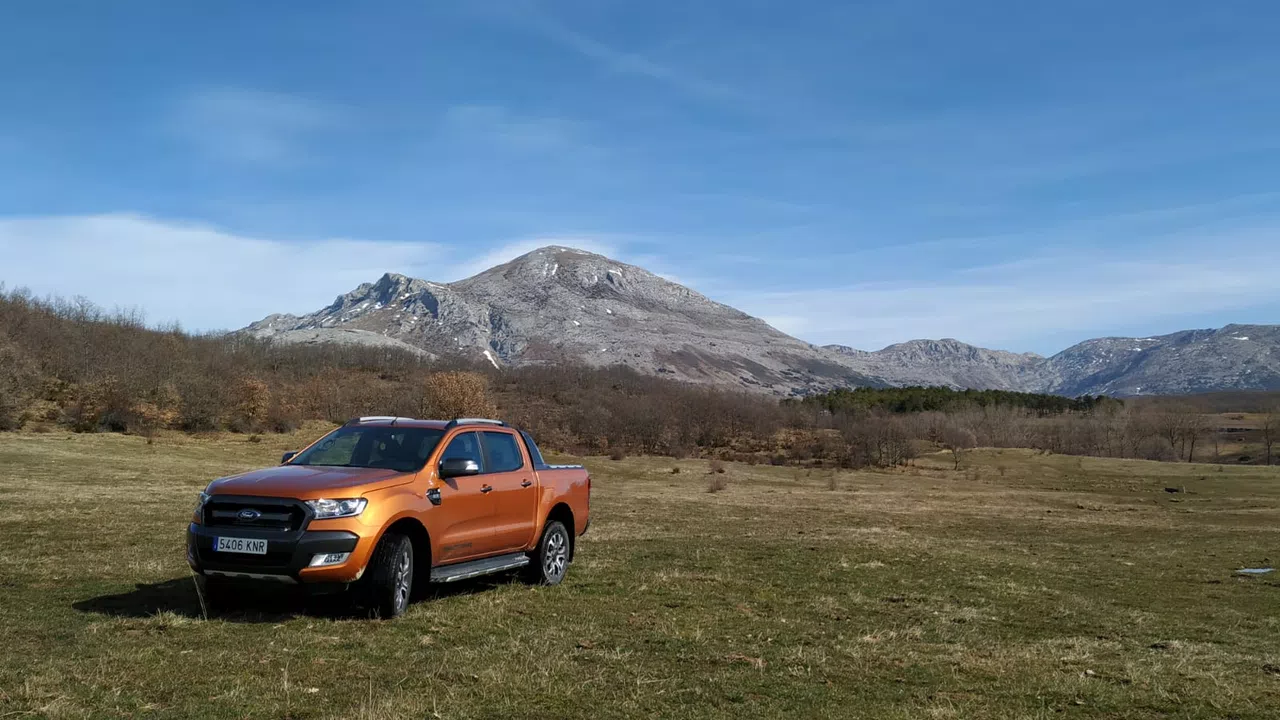
El Roblón de El Monasterio is located 6 km from Velilla del Río Carrión. The starting point of the route is at the hermitage of Areños. We need to enter the Valdehaya Valley, and it is advisable to take the route by mountain taxi due to the large number of forest tracks found in the valley.
The round-trip distance of the route is approximately 12 km, and it is an easy route if done on foot. It is advisable to wear comfortable clothing and footwear, preferably in bright colors as a precaution during hunting seasons. The route passes through the following landmarks:
Hermitage of Nuestra Señora de Areños - Puente la Maderada - Valdehaya Valley - Grupo el Abuelo - Lavaderos de Besande and Curva de Senda al Roblón - Roblón de El Monasterio - Monastery. El Roblón de El Monasterio is located within the municipal area of Velilla del Río Carrión, and its common name is sessile oak, with the scientific name Quercus petraea.
A very special place
It has a trunk perimeter of 5.04 m and a total height of 17 m. It is a centuries-old tree. The roblón is situated at an altitude of 1446 meters above sea level and is notable for its large dimensions. Interestingly, it is located in an enclosed area, and at its base, there is a nativity scene placed by visitors.
Just 200 meters away, you can find the very scattered stone remains of an ancient Benedictine Monastery, about which little information is available. Throughout the journey, you will encounter juniper groves, oak woods, beech forests, and holm oak groves. Additionally, the path is perfectly signposted, and from the monastery area, you can see Velilla del Río Carrión and several nearby villages.
The estimated walking time for the route is 3 hours and 30 minutes, with a round-trip distance of 12 km. The journey by off-road vehicle takes approximately 1 hour and a half. Upon returning to Velilla del Río Carrión, it is particularly noteworthy that you can find a large number of junipers in the juniper grove of Peña Lampa.

Route of the Reservoirs
A route that introduces us to the Fuentes Carrionas Natural Park, in the Palencia Mountain. Along the way, we will visit the reservoirs of Compuerto, Camporredondo, Cervera, Requejada, and Aguilar. This is an area where we can make stops in different villages to admire their artistic heritage. We can also try to capture the wonderful panoramic views offered by the viewpoints with our cameras. Interestingly, if the water levels in the reservoirs are low, we can admire the treasures hidden in their depths. We can walk and appreciate what remains of the villages of Villanueva del Río or Cenera de Zalima, villages submerged by the waters of the Aguilar reservoir.

Renaissance Lands Route
A tour through Tierra de Campos, visiting the towns of Becerril de Campos, Paredes de Nava, and Cisneros. Admire the rich heritage these villages hold, the birthplace of illustrious figures such as Cardinal Cisneros, Jorge Manrique, and Pedro and Alonso Berruguete.
These towns have become authentic museums where magnificent treasures are displayed. In Cisneros, you can appreciate the marvelous Mudejar coffered ceiling of the church of San Facundo and San Primitivo. You can also admire the main altarpiece of the church of San Pedro, a work by Francisco Giralte. In Paredes de Nava, a visit to the museum housed in the church of Santa Eulalia is a must. Generally, interesting pieces are exhibited, such as the panels of the altarpiece by the painter Pedro Berruguete, as well as works by Juan de Juni and Juan de Flandes.
In Becerril de Campos, which once had seven churches, only a few remain standing today. Fortunately, among them stands out the church of Santa María. Converted into a museum, it houses important pieces from the different churches in the locality. Sculptures by Alejo de Vahía, Juan de Juni, paintings by Pedro Berruguete, and an important collection of goldsmithing. Also a must-visit is San Pedro Cultural, an Astronomy Interpretation Center built within an old church.

Wine route
Tour through the Cerrato region, a route that combines gastronomy and traditional heritage. A journey that will take us to see the interior of wineries and enjoy the rich wines from the different denominations within the province of Palencia, including the Arlanza and Cigales denominations. A wine culture that envelops the towns of Astudillo, Baltanás, Torquemada, Palenzuela, Venta de Baños, or Dueñas.
A tour that will show us the wine-making process and the architecture of its wineries, with tastings to savor their wines in wineries such as Bodegas de Esteban Araujo in Torquemada and Remigio de Salas Jalón in Dueñas. Unlike other ecotourism destinations in the country, here you can breathe authenticity. Particularly noteworthy is their generally underground location for all processes.
A tour that will show us the wine-making process and the architecture of its wineries, with tastings to savor their wines in wineries such as Bodegas de Esteban Araujo in Torquemada and Remigio de Salas Jalón in Dueñas. Unlike other ecotourism destinations in the country, here you can breathe authenticity. Particularly noteworthy is their generally underground location for all processes.

Traditional Architecture Route
A route that shows us examples of architecture linked to the customs and lives of its residents.
Buildings such as dovecotes, shepherds' huts, wineries, and homes that used materials like adobe, stone, and wood.
It will take us to the Cerrato region to see a sample of all of them. How the wineries are, some of which can be visited, such as in Astudillo. An underground stone architecture with arches that reinforce its vaults. The huts are made of irregular stones, with the one in Cevico de la Torre standing out. The so-called 'The Dragon', part of the Royal Burgalesa cattle track.
The dovecotes, a popular architecture that presents different typologies, can be seen at the Interpretation Center in Santoyo. And don't forget to stroll through some of its towns to appreciate their frameworks that still preserve part of their ancient walls, like Castrillo de Onielo or Vertavillo.

Route of the Medieval Paintings
It is a route that focuses on the Palencia Mountain, where the largest concentration of Romanesque art can be found. On this route, in addition to admiring this style of painting, we can see the architecture in these small churches and observe their monumental doorways, capitals, and corbels. We can admire their magnificent murals inside, some of which are still preserved. Examples include the church of Santa María la Real de Valberzoso, San Pelayo de Perazancas, or San Cornelio and San Cipriano of San Cebrián de Mudá.
Other examples are Santa Eulalia in the Barrio de Santa María, San Juan Bautista de Matamorisca, or Vallespinoso de Cervera. These are paintings depicted on their walls with a religious theme and a clearly pedagogical function. They use primary colors such as reds, blues, and yellows, and the colors are flat with no volume. These paintings provide an interior luminosity that surprises visitors.
Other examples are Santa Eulalia in the Barrio de Santa María, San Juan Bautista de Matamorisca, or Vallespinoso de Cervera. These are paintings depicted on their walls with a religious theme and a clearly pedagogical function. They use primary colors such as reds, blues, and yellows, and the colors are flat with no volume. These paintings provide an interior luminosity that surprises visitors.

Castle Route
On this route, we will travel back in time through the fields. To delve into the lives of the lords who owned these castles, we will visit the main castles of the province.
Some of them can be visited, and you can stroll through their rooms. Castles such as the Eugenio Fontaneda Castle in Ampudia, the Tower of Belmonte de Campos, the Castle of the Sarmiento in Fuentes de Valdepero, and the Monzón de Campos Castle can be seen from the outside. This route is designed to better understand the historical and artistic heritage of the province. These are large defensive buildings with panoramic views that surprise visitors. We can explore their rooms, which are spectacular museums of history.
Some of them can be visited, and you can stroll through their rooms. Castles such as the Eugenio Fontaneda Castle in Ampudia, the Tower of Belmonte de Campos, the Castle of the Sarmiento in Fuentes de Valdepero, and the Monzón de Campos Castle can be seen from the outside. This route is designed to better understand the historical and artistic heritage of the province. These are large defensive buildings with panoramic views that surprise visitors. We can explore their rooms, which are spectacular museums of history.

Route of Charles V
The Route of Charles V. It commemorates the arrival of Charles V in 1517 to Spain, where he would be proclaimed King in the Courts of Valladolid. A young Charles who arrives at the port of Santander, without speaking Spanish. He will cross the province of Palencia from north to south to visit his mother, Doña Juana, who was retired in Tordesillas.
This route, which we recreate, begins in Aguilar de Campoo. It continues through Herrera de Pisuerga, Abia de las Torres, Revenga, then through Becerril de Campos, Ampudia, until reaching Tordesillas. Nowadays, this route is undertaken between the months of March and October, taking advantage of the good weather. For this reason, it is highly recommended.
This route, which we recreate, begins in Aguilar de Campoo. It continues through Herrera de Pisuerga, Abia de las Torres, Revenga, then through Becerril de Campos, Ampudia, until reaching Tordesillas. Nowadays, this route is undertaken between the months of March and October, taking advantage of the good weather. For this reason, it is highly recommended.

Royal Road Route
Camino Real. It is a simple route that starts from the capital of Palencia. It passes through the town of Husillos to visit the Abbey of Santa María, founded in the 10th century. On the way to Amusco, we can admire a part of the Canal of Castile with the locks of Calahorra de Ribas. In Amusco, its monumental church of San Pedro, more popularly known as the Pajarón de Campos, stands out. Its portals, which date back to the 12th and 13th centuries, are noteworthy. From there, we approach the small village of Valdespina, where we will make a stop to visit its church of San Esteban and its hermitage of Nuestra Señora del Olmo, with Romanesque vestiges.

La Valdavia Route
Route of La Valdavia. On this route, we will follow the course of the Valdavia River, which originates in the Sierra del Brezo. We will visit the riverside villages starting with Congosto de Valdavia, Dehesa de Tablares, and continue south without straying from the river, passing through Puebla de Valdavia, Buenavista de Valdavia, Polvorosa de Valdavia, Renedo de Valdavia, Arenillas de San Pelayo, until reaching the town of Bárcena de Campos, where we conclude the route. In each village, you can admire its rich artistic heritage, including Romanesque-style churches and baptismal fonts. You can also enjoy the natural surroundings of these riverside localities.
Route of La Vega del Carrión
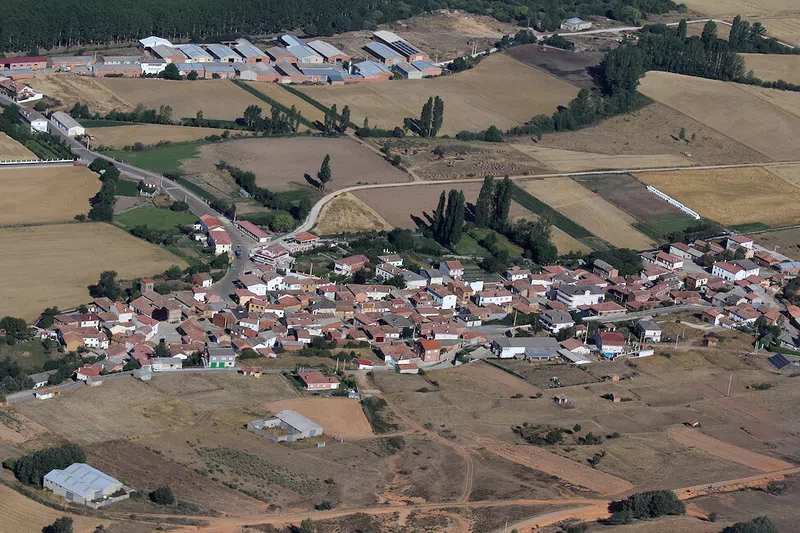
La Vega del Carrión. A car journey through the riverside towns along the Carrión River. Fresno del Río, Pino del Río, Acera de la Vega, Villosilla de la Vega, Poza de la Vega, Barrios de la Vega, Villaluenga de la Vega, San Martín del Obispo, and we will arrive at Saldaña. A route where we will see a large obelisk in Pino del Río. A natural environment with riverside species such as ash trees, willows, or poplars, featuring areas designated for fishing. In the town of Villaluenga, you can visit the museum dedicated to radio and communications, which will surprise you. In La Vega del Carrión, you can also enjoy an ethnographic museum and be transported to the 1950s to see what the old schools were like in Santa Olaja de la Vega, as well as appreciate the rich traditional heritage of each of the towns.

El Cerrato Route
Puerta del Cerrato. We continue in the Cerrato region, and the route begins in Dueñas. We will proceed to the town of Cevico de la Torre to stroll through this locality and see its emblazoned houses. Also, its popular architecture, in Alba de Cerrato, we can admire its Gothic Justice Pillory. We continue towards Vertavillo, which still preserves remnants of its medieval walled enclosure and offers panoramic views. In Castrillo de Onielo, which also preserves remains of the walled enclosure, we conclude the route by passing through the towns of Tariego to visit its wineries and end in Venta de Baños.

El Cerrato Interior Route
To begin, we delve into the interior of El Cerrato. We start the route in the town of Palenzuela, where we will see the remains of an ancient fortress and the monastery of San Francisco. It has a surprising museum in the Clock Tower.
We continue towards Antigüedad, an intriguing town that welcomes us with a fighter jet. In Cevico Navero, which preserves remnants of its wall, we will see the monastery of San Pelayo, completely rebuilt. In Hermedes de Cerrato, with its 10th-century hermitage of the Virgen de las Eras. We arrive in Baltanás, where we can stroll through its streets and visit the Museo del Cerrato, located in a baroque building.
We continue to visit the towns of Hornillos de Cerrato and what remains of its castle and its gypsum extraction mines. Finally, we conclude the route in Valdecañas de Cerrato and see the church of San Nicolás de Bari.

Route of the Roman Villas
Roman Villas Route. On this route, we propose visiting the two Roman villas preserved in Palencia. They are the Villa of La Olmeda, located near Saldaña in Pedrosa de la Vega, and the Villa of La Tejada in Quintanilla de la Cueza. There is a distance of 30 km between them. This route gives us an idea of how the inhabitants lived in these lands during the late Roman Empire. They are notable for the perfect preservation of their mosaics, which are of great beauty and thematic variety. The heating system they used, the hypocaust, can be appreciated in some of the rooms. Along with these two villas, we complete the route by visiting the Monographic Museum of La Olmeda. This museum is located in the town of Saldaña, where the pieces found during the excavations are exhibited.

Pisuerga Riverside Route
The route we propose is through the region of Cerrato, around the Pisuerga River and its tributaries. A unique landscape among hills, the route begins in the town of Astudillo to stroll through its streets and discover its rich cultural and traditional heritage with its unique wineries. Try the delicious sweets made in the Monastery of the Poor Clares.
We continue along the river to the small village of San Cebrián de la Buena Madre to see its palace, then to Valbuena de Pisuerga to visit the Church of San Martín de Tours. We proceed to Quintana del Puente and Herrera de Valdecañas with its Gothic-style church, stopping in Cordovilla la Real to admire its 14th-century Justice Pillory.
We will cross the 19-arch bridge of the town of Torquemada, just as Juana la Loca did when she passed with her husband's funeral procession. We conclude by visiting Villamediana and Valdeolmillos to see the Church of San Juan Bautista, which features Romanesque remains.