
Abbey Santa María de Benevivere
Abbeys in Palencia
Of course! Palencia has a rich monastic history, with notable abbeys.
Abadía de Lebanza: Located in the Montaña Palentina, this 10th-century Benedictine abbey is a haven of peace in a stunning natural setting.
The Abadía de Santa María de Benevívere, located near Carrión de los Condes, was founded in the 12th century by Don Diego Martínez de Villamayor. This abbey, inhabited by canons of Saint Augustine, saw its assets auctioned off after the Mendizábal disentailment.
Abbey Santa María de Benevivere
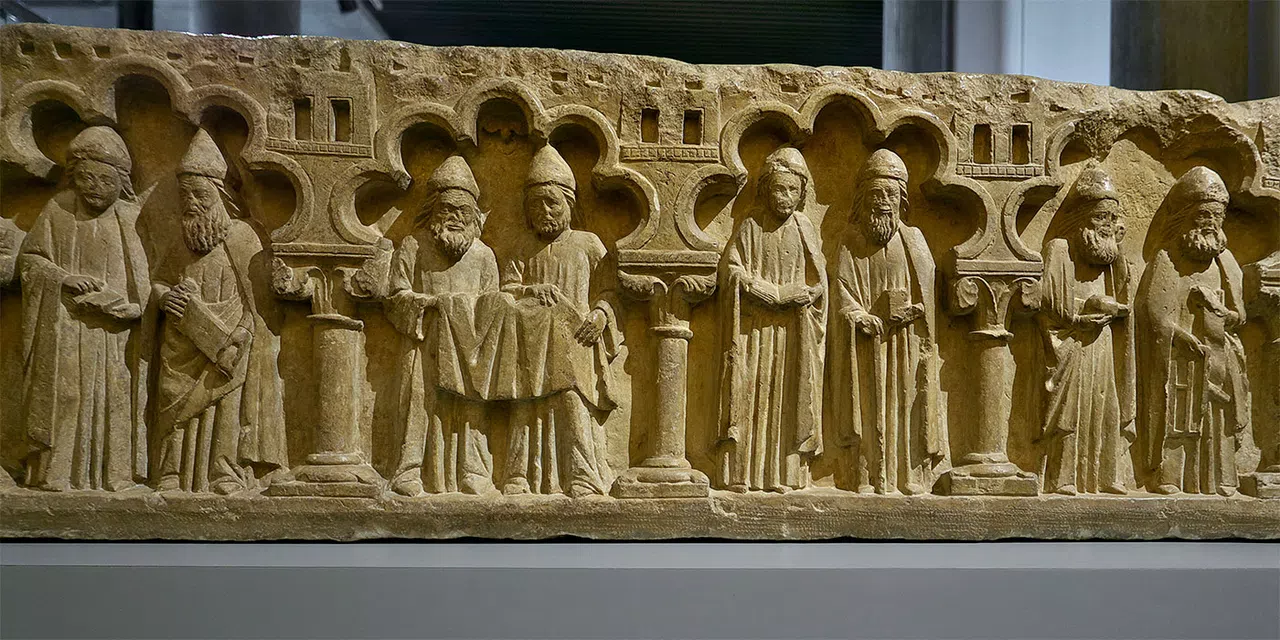
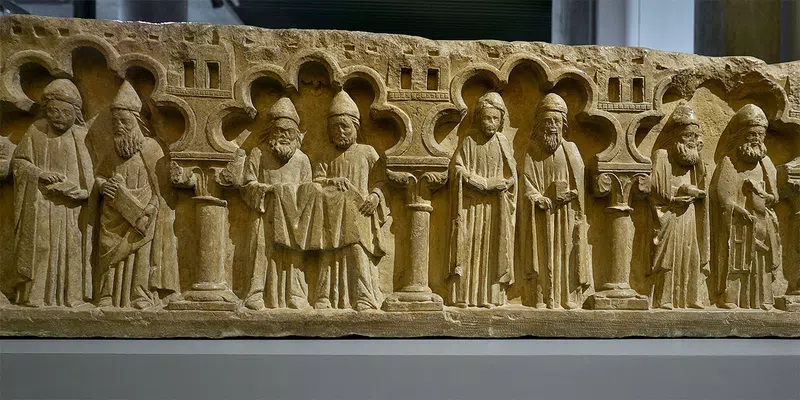
Sarcophagus of the Abbey of Santa María de Benevívere - Museum of Palencia
The Abbey of Santa María de Benevívere, located near Carrión de los Condes, was founded in the 12th century by Don Diego Martínez de Villamayor. This abbey, inhabited by canons of Saint Augustine, saw its assets auctioned off following the Mendizábal disentailment.
Currently, only a few vestiges remain in situ. Some remnants are found in a park in Carrión de los Condes, while others are preserved in various museums, such as this sarcophagus displayed at the Museum of Palencia.
Characteristics of the sarcophagus:
This 13th-century sarcophagus is a typical example of the structure and decoration of Castilian noble tombs of the time.
Elevation: The urn is elevated by ashlars or animals, such as lions.
Decoration: The sides feature arcades with architectural compositions reminiscent of castles. Figures are distributed under the arches.
Iconography:
The iconography of this sarcophagus links it to a series of works created in a workshop in Carrión de los Condes between 1240 and 1260. It is believed that most of these pieces were made by the same sculptor: Roy Martínez de Bureba y de Bame.
Description of the faces:
Main face: At the top, the Pantocrator is observed within a mandorla, flanked by six apostles on each side, grouped in pairs.
Opposite face: An architectural structure with six five-lobed arcades housing ten characters from the Old Testament, difficult to identify, is appreciated.
Historical context:
The Abbey of Santa María de Benevívere was an important religious and cultural center in the Middle Ages. Its disentailment in the 19th century led to the dispersion of its assets, including this sarcophagus that we can now view at the Museum of Palencia. This tomb is a valuable testimony to Castilian funerary art and the history of the abbey. From the Abbey of Santa María de Benevívere, we only find remnants that testify to the once significant Augustinian abbey, very close to the town of Carrión de los Condes. It was founded in the 12th century by the regular canons of Saint Augustine. Due to the disentailment, its artistic heritage was distributed across various points in the province, and its ashlars were used for other constructions. Several tombs from this heritage are preserved in the archaeological museums of Palencia, in Gothic style.
Lebanza Abbey
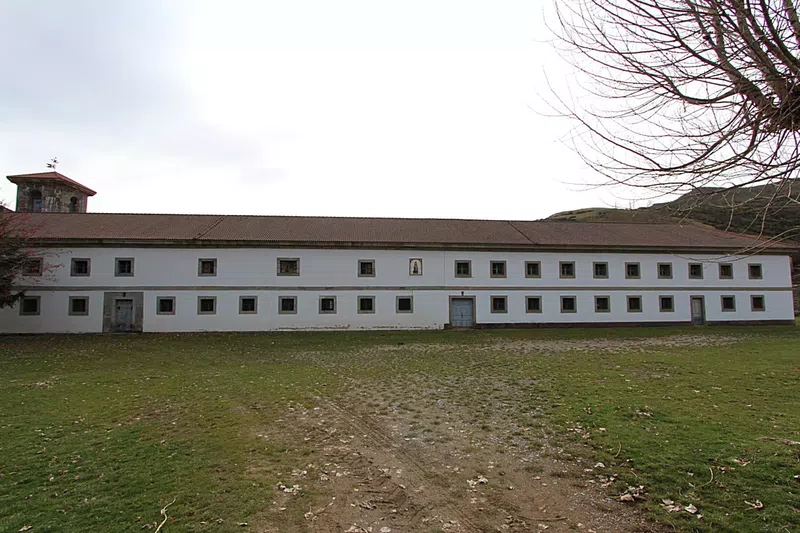
The Abbey of Lebanza is a fascinating place with a long history. Here are some interesting facts about it:
Location: It is located three kilometers from the town of Lebanza, in the municipality of La Pernía, in the Palencia Mountain (Castilla y León, Spain).
History:
Origins: It was founded in the year 932 by the Counts of Peñas Negras, Alfonso Díaz and his wife Justa. Legend has it that it was built where the Virgin Mary appeared sitting on a rock.
Reconstructions: Of the original Romanesque building from the 12th century, only two capitals remain. In 1747, a fire destroyed almost the entire complex. Between 1776 and 1780, Charles III ordered its reconstruction in the Neoclassical style, a work attributed to the architect Francisco Sabatini.
Architecture:
Church: It has a Greek cross plan with a lowered central dome. It houses two Baroque altarpieces.
Other buildings: The abbey includes a residence for canons and other structures.
How to get there:
From the town of Lebanza, a local road leads you to the abbey.
What to see:
The Neoclassical church.
The Romanesque remains.
The natural surroundings of the Palencia Mountain.
Recommendations:
Check the visiting hours before going.
The abbey is located in a mountainous area, so wear appropriate clothing.
Enjoy the tranquility of the place and the views.